About Me

My photo
Blogging about things that matter to me. Photographing things I love - Instagram @debcyork. Writing about both. Only wine and chocolate can save us… You can also find me on Twitter (@debcyork) and Facebook. If you like four-legged views, try @missbonniedog on Twitter
Showing posts with label Peaky Blinders. Show all posts

Tuesday, 7 November 2017

Leaving A Dent

Image result for future


Helen Dunmore, who sadly died this year, wrote an afterword for her last novel Birdcage Walk in which she talks about her interest in how very few people make any mark on history.  History as future generations will know it is written by a privileged few who all have their own spin to put on events.  The vast majority of us will have to be content with having been a part of the big picture, despite huge output on social and other media types.  Hardly any people stand the test of time and are remembered.  Even people who may have been mildly famous (or infamous) for a period often are forgotten by the next generation.  Wouldn't it be interesting to see, in a century, if anyone knew what Instagram had been?  Who Beyonce or Taylor Swift were?  Tom Hanks, Meryl Streep?  Which books had stood the test of time?  And as for politicians, well, each UK Parliament has 650 Members.  How many of those will leave a dent where they sat?  Even in their constituency's history?

There was an article recently about the imminent return of Peaky Blinders - can't wait - and apparently a new major character will be a female trade unionist and political activist named Jessie Eden.  She was a real person.  Who achieved amazing things.  But how many people will have ever heard of her before now?  Well-known and influential at the time.  But part of a much bigger picture of discontent and unrest in the Twenties and Thirties therefore consigned in accounts of that period to a footnote if she is lucky.

Banding together is more powerful in any situation.  That is not to say that one person should not do or say what feels right to them.  Look at Rose McGowan recently.  Someone has to start each ball rolling.  But if we are to make a real mark, leave a proper dent, it seems to me that the best way is to find like-minded people and work as one.  


Monday, 25 April 2016

Life In Television

  
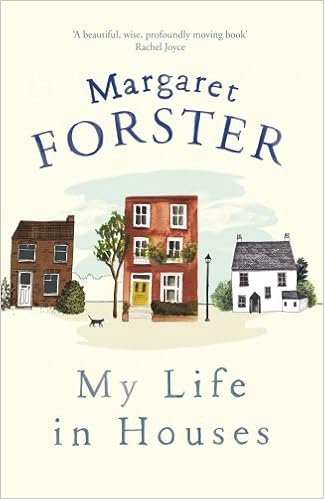
As any previous readers  might remember, I have a strong interest in the surroundings of our family history.  Houses, friends, pets, jobs.  Life.  Otherwise family trees are just dates.  I am currently therefore really enjoying reading the late Margaret Forster's My Life In Houses.  She uses her history of houses, student rooms and so on to look at her life and at the idea of 'home'.  Highly recommended.
 
And in homage, I introduce a very brief 'life in television'.  We are now leaving very different records of our lives behind for our descendants to find. So maybe, as also shown by the excellent BBC2 series Back In Time For The Weekend, it is time for a look back. 
For example, my children are completely fascinated by me starting life with virtually no television.  And the bit I saw was black and white!  Horrors!  In fact, the arrival of colour television in my home is fixed in my  mind very clearly.  I suddenly realised that Bagpuss was pink...  
 
I remember watching live as the SAS 'went in' to the Iranian Embassy siege in 1980.  And Lesley Judd arriving in New York on Concorde for Blue Peter.  There were sneaky attempts to watch 'unsuitable' programmes like Dallas and I had a passion for  1960s programmes like The Monkees or Star Trek.  The Dukes of Hazzard and other American imports like The A-Team were mandatory Saturday tea-time viewing.  We learnt how to use videos too.
 
At university in the early 1990s, my household did love Eldorado, a soap opera so bad it was brilliant.  My now husband's houseful of lads sat down most days to play Countdown - nothing changes with students.  And we were very keen on This Morning - for many reasons but mainly Richard Madeley and Judy Finnegan.
https://en.wikipedia.org/wiki/Richard_and_JudyTV memories during my London work years include Friends, George Clooney smouldering in ER, Princess Diana's funeral and the Hollyoaks Sunday omnibus, which accompanied the obligatory hangover.  We worked and played hard then.  I do remember typing endless letters to Question Time on behalf of the MP I worked for.  She never did get on the panel though. Then later, to my university friends' delight, when I retrained as a chef, I worked on The Richard and Judy Show, cooking lunches, canapés, stuff ordered by celebrities.  All sorts.  Richard and Judy themselves were just as we had imagined.  I loved them.  Never saw the show though - always finishing post-show prep!
 
Since children?  Well, I was blessed with an eldest who believed in getting up before CBeebies even went on air.  There was no YouTube or iPlayer so we watched the same videos on a loop.  I know Postman Pat and the Ice Cream Machine back to front even now (click for the full episode!).  We then progressed through all the staples - Thomas, Power Rangers, Disney cartoons, etc etc.  Adult TV was a mystery.  There was no 'catch-up' and I was too knackered to stay up.
 
Now, as technology has sped up and the way we watch programmes has changed so much, I have realised the only way to view anything actually with the children is to stage a movie night.  They don't use a TV guide.  They barely watch anything when it is first broadcast.  Their main viewing is YouTube channels.  They can talk for an hour in the car about their favourite stuff and we have absolutely no idea what they are going on about.  And the old programmes I enthuse about for them seem so slow when tracked down on said YouTube.
 
Me, I am still of the generation who are excited about a new series starting at a particular time.  New Peaky Blinders on 5 May?  Line of Duty final episode this week?  Clear the evening diary.  Get the wine and the snacks ready.  I love iPlayer and the other services' convenience but some programmes deserve to be events.  Which apparently definitely shows my age.


Friday, 17 October 2014

Who were the Peaky Blinders?


My current favourite viewing is Peaky Blinders on BBC2.  I watched the last series and it is now three episodes into the second series.  I am not a TV critic and I dread to think how I would come across on Gogglebox but I have to say that Peaky Blinders is, my humble opinion, excellent television.

It is dark, gritty, violent.  The whole thing is set to fantastic modern music which despite its setting in the 1920s seems entirely appropriate somehow.  And the cast are fabulous.  There, that's my review!

I have started to wonder about the historical basis for the series though.  As ever, I was also thinking about the family history aspect.

The Peaky Blinders did indeed exist in late nineteenth and early twentieth century Birmingham.  The name Peaky Blinders first came to national notice in around 1890.  It has long been thought that the name referred to razor blades having been sewn into the peaks of the caps worn by the gang, for use in slashing victims or rivals.  However, a new book by Birmingham historian Carl Chinn disputes this.1.  Chinn himself discovered, during his research, that his great grandfather had actually been a Peaky Blinder!  He knew that he came from a line of illegal bookmakers but it turned out that, another generation back, there was a violent and abusive gang member.

Apparently, many of the descendants of members of the Birmingham gangs - the Peaky Blinders were definitely not the only one - are unaware of their ancestors' criminal pasts.  Their deeds were not discussed, whether from shame or guilt or whatever.

Carl Chinn actually began his research in the 1980s and 1990s, well before the current interest in the gangs obviously.  He was lucky enough to manage to get some first hand testimony from people who had lived through the period when the gangs were prevalent. 

In terms of family history, this is a major point of good practice.  Always question as many people as possible, especially elderly relatives, as a starting point.  You never know what snippets of information you might come across.  I wish that I had asked more questions when my own grandparents were alive, that's for sure.

There was a character referenced in the first series of  Peaky Blinders called Billy Kimber.  Kimber did indeed exist and ended up as a wealthy man in retirement in Torquay (sorry, now biting down on the desire to reference the view from Torquay hotel bedroom windows... love Fawlty Towers...).  He had made his money as a big hitter of British crime though.  The television series portrayed him as a Londoner but he too was actually a Brummie.  Chinn also traced a descendent of Kimber:

Justine said: “My family had thought of Billy Kimber as a criminal, we knew that much, who had done time in Winson Green.
“But we had absolutely no idea just what a major gangster he became. We had assumed he was simply a local thug.
“We are not particularly proud of his career, but of course it is rather exciting knowing one is directly related to a godfather of organised crime.”

Good grief, the producers of Who Do You Think You Are?  would probably fall over themselves if a celebrity subject could be proved to have such an ancestor.  Can you imagine the "journey" that they would be taken on?  Through the streets of modern day Birmingham, probably into Winson Green prison, a list of victims for them to shed a tear over.... maybe that's what they will do with Carl Chinn's book about the real Peaky Blinders - start tracing them forwards to see if they have spawned any likely celebrities!  [There is a long running joke - urban myth? - that Michael Parkinson's family tree was done by the programme but his roots were considered too boring!  One can't help thinking that the stories which are shown are the tip of the research iceberg...]

Another aspect which piqued my interest is the fact that even if we find a criminal record for an ancestor, this is not necessarily the whole story.  On last night's episode of Peaky Blinders, Tommy Shelby (played by the lovely Cillian Murphy - see above) ordered two gang members to get themselves arrested in order to avenge the death inside Winson Green prison of a stooge who had been paid by the gang to go to prison (to give the police an arrest for bookmaking and keep them off the real criminals).  So if that had been real life, three men would have criminal records.  One for no reason other than his family were promised money and two for some minor offence when they were actually violent gang members!  You can see how descendents became less and less aware of what happened, as the years passed.  Below are the pictures of some real life Peaky Blinders.  Their listed offences are actually things like stealing bicycles...


I must say that the violence shown on the television series is quite extreme.  But somehow because of the setting, it does not feel that it is shown gratuitously.  Although I could have done without watching Cillian Murphy being beaten to a pulp... far too lovely for that...  Sadly, 1920s Birmingham, many people could not just change channel when faced with such violence.


1.  The Real Peaky Blinders: Billy Kimber, the Birmingham Gang and the Racecourse Wars of the 1920s - Carl Chinn (paperback, 10 October 2014)