
About Me

My photo
Blogging about things that matter to me. Photographing things I love - Instagram @debcyork. Writing about both. Only wine and chocolate can save us… You can also find me on Twitter (@debcyork) and Facebook. If you like four-legged views, try @missbonniedog on Twitter
Showing posts with label family tree. Show all posts

Monday, 25 April 2016

Life In Television

  
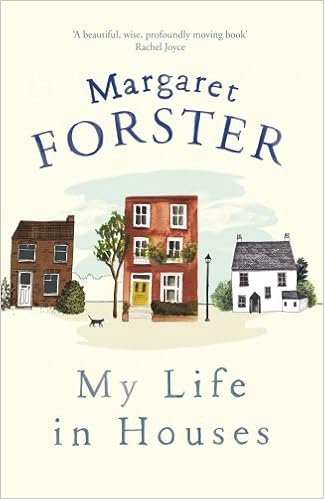
As any previous readers  might remember, I have a strong interest in the surroundings of our family history.  Houses, friends, pets, jobs.  Life.  Otherwise family trees are just dates.  I am currently therefore really enjoying reading the late Margaret Forster's My Life In Houses.  She uses her history of houses, student rooms and so on to look at her life and at the idea of 'home'.  Highly recommended.
 
And in homage, I introduce a very brief 'life in television'.  We are now leaving very different records of our lives behind for our descendants to find. So maybe, as also shown by the excellent BBC2 series Back In Time For The Weekend, it is time for a look back. 
For example, my children are completely fascinated by me starting life with virtually no television.  And the bit I saw was black and white!  Horrors!  In fact, the arrival of colour television in my home is fixed in my  mind very clearly.  I suddenly realised that Bagpuss was pink...  
 
I remember watching live as the SAS 'went in' to the Iranian Embassy siege in 1980.  And Lesley Judd arriving in New York on Concorde for Blue Peter.  There were sneaky attempts to watch 'unsuitable' programmes like Dallas and I had a passion for  1960s programmes like The Monkees or Star Trek.  The Dukes of Hazzard and other American imports like The A-Team were mandatory Saturday tea-time viewing.  We learnt how to use videos too.
 
At university in the early 1990s, my household did love Eldorado, a soap opera so bad it was brilliant.  My now husband's houseful of lads sat down most days to play Countdown - nothing changes with students.  And we were very keen on This Morning - for many reasons but mainly Richard Madeley and Judy Finnegan.
https://en.wikipedia.org/wiki/Richard_and_JudyTV memories during my London work years include Friends, George Clooney smouldering in ER, Princess Diana's funeral and the Hollyoaks Sunday omnibus, which accompanied the obligatory hangover.  We worked and played hard then.  I do remember typing endless letters to Question Time on behalf of the MP I worked for.  She never did get on the panel though. Then later, to my university friends' delight, when I retrained as a chef, I worked on The Richard and Judy Show, cooking lunches, canapés, stuff ordered by celebrities.  All sorts.  Richard and Judy themselves were just as we had imagined.  I loved them.  Never saw the show though - always finishing post-show prep!
 
Since children?  Well, I was blessed with an eldest who believed in getting up before CBeebies even went on air.  There was no YouTube or iPlayer so we watched the same videos on a loop.  I know Postman Pat and the Ice Cream Machine back to front even now (click for the full episode!).  We then progressed through all the staples - Thomas, Power Rangers, Disney cartoons, etc etc.  Adult TV was a mystery.  There was no 'catch-up' and I was too knackered to stay up.
 
Now, as technology has sped up and the way we watch programmes has changed so much, I have realised the only way to view anything actually with the children is to stage a movie night.  They don't use a TV guide.  They barely watch anything when it is first broadcast.  Their main viewing is YouTube channels.  They can talk for an hour in the car about their favourite stuff and we have absolutely no idea what they are going on about.  And the old programmes I enthuse about for them seem so slow when tracked down on said YouTube.
 
Me, I am still of the generation who are excited about a new series starting at a particular time.  New Peaky Blinders on 5 May?  Line of Duty final episode this week?  Clear the evening diary.  Get the wine and the snacks ready.  I love iPlayer and the other services' convenience but some programmes deserve to be events.  Which apparently definitely shows my age.


Monday, 8 February 2016

Numbering

 
Something very exciting has happened.  I have won a competition to have a DNA test!  No, not on Jeremy Kyle.  I entered a competition run by the marvellous Families In British India Society (FIBIS) before Christmas.  You had to write a piece about why a DNA test might be useful for your family history research.  And I have won one of the three places!

Now, clearly this is a niche subject to be excited about but just indulge me for a moment.  It hopefully means that I can narrow down which part of India my direct ancestors were from.  There are also questions over a number of Irish connections (ironic, given I have married into a large Irish family) and over the parentage of a great great great grandmother.  I wrote about all of these things for my entry and I have been offered a Family Finder test.  A kit is on its way!  How amazing and bizarre.  Let's hope there are no nasty surprises... Nothing anyone hasn't mentioned in the last forty or so years...  I will keep you posted - unless it is really embarrassing, obviously.
 
*    *    *

So I got that news last night and wanted to share the news.  However, I did plan to write about numbers today. A very good friend was (whisper it) fifty last week.  She does not look fifty.  Far from it.  But she is quite fed up about this milestone.  She says it feels very different to forty and no amount of reminders of the amazing fifty plus celebrities there are these days can cheer her up.  And I do see her point.  I haven't reached it yet but fifty years on the planet is quite something.

What would it have been like, though, in the days when fifty was properly old?  England, for example, in the eighteenth or nineteenth centuries.  When it was quite an achievement to have survived childhood, giving birth, dangerous employment.  There would be the same physical changes presumably but little knowledge of how to ease them.  And for the lower classes, there would be the ever present need to earn a living despite the ageing process.  Or the workhouse (or worse) awaited.

There are, of course, many awful cases of people in developed countries dying at young ages still.  Only the other week, I posted about cancer and diabetes and other diseases.  However, in general, a person reaching their fiftieth birthday in a developed country can reasonably expect at least another twenty years on Earth. 

What is very wrong with Planet Earth, though, is the number of human beings for whom fifty is still an incredible achievement and the number for whom fifty is not a time to look forward.  Life expectancy is very uneven amongst our race.  Fifty should not be a scary number for any of us.

Monday, 11 January 2016

Concise Descriptions

Well, week two of my resolution  to write every week.  Made it by the skin of my teeth!  I have had a subject in mind for a couple of days but just have not put fingertips to keyboard.  [End of excuses]

Anyway, it relates to last week's subject, Herbert Wason Major.  In continuing to attempt to solve the mystery of his provenance, I came across an army record for a Herbert Wason Major.  The dates all tie in so it may well be him.  However, what really caught my eye for the blog was the reasons given for discharge.  The record was not a personal record for him, more a list of soldiers discharged from that regiment and the reasons why.  It is from the 1870s and goodness, you would not get away with the reasons they used these days...

To give a few excamples:  'Old Age';  'Inefficient'; 'Worthless'.

And I began to imagine if we could use such descriptions in public service discharges today...

Quangos, MPs, civil servants, spin doctors.  And don't get people started on the Environment Agency or the local councils.  The list is endless.  To say nothing of the private sector. 

Of course things are so much better and fairer now.  But back then, they could dismiss someone's career of choice with a one word answer.  Chapter and verse for reasons?  Warnings?  Suspensions?  Why bother with all that!  Maybe these soldiers had been warned, reprimanded, penalised before their discharges but those one word descriptions do make for hilarious reading.  The words used as 'reasons' are repeated for different men too, which makes one wonder what the army's definition of "inefficient' or 'worthless' actually was.

If I ever get any time, I intend to look into some random discharge records and see if this habit was peculiar to this regiment.  Somehow, and rather sadly, I doubt it.

Monday, 4 January 2016

So long, Napoleon


So. I had pretty much given up on my blog.  Not on writing.  Or family tree stuff.  I just felt I had nothing sufficiently interesting to say and no time to think.  But it is a New Year.  With new goals and intentions.
 
And one of mine is to post once a week.  To give me a break from my attempts at longer pieces. I also have a renewed interest in my family tree (I will explain shortly) and I am hoping to stick to regular times for all of my writing so this blog commitment will help give structure.  I hope.
 
Anyway, the renewed genealogy interest has come in the form of a most annoying piece of news.
 
One of my most prized family discoveries had been my four times great grandfather, Solomon Major.  He joined the 66th Regiment of Foot in 1805 and in 1817, in Bengal, he produced (as ever, no sign of a mother on the paperwork, indicating illegitimacy) a son named Robert Clement Major.    Solomon left India in 1817 and his regiment were sent to St Helena to guard Napoleon.  A fact which, as an obsessive history reader, I loved.  (I ignored his abandonment of Robert and subsequent English marriage!)
 
But...  The Ancestry website very 'helpfully' leaves you links to items which may be of interest.  When I looked last week, for the first time in ages, there was a link to someone who had included the Majors on their tree.  But theirs looked very different to mine.
 
Now, I have blogged before about the wariness with which one should approach information from other people's trees (my own mother was dead and buried in America according to one Ancestry tree!).  However, I was really interested in this Major tree because that family is a real brickwall for me.  My great grandfather Frederick Clement Major did not leave India after Partition and we do not even have a date of death for him.  Other than his parents' names, his grandfather Robert and Solomon, I have very little.
 
But this new tree's Robert Clement Major had many children, one of whom was apparently Herbert Wason Major, Frederick Clement's father (come on, keep up!).  After fruitless digging, I posted a query about these extra siblings on Rootschat.com (an excellent source of help).  And after a number of replies, the whole top of my Major tree - including the treasured discovery of Solomon and Napoleon - is now thrust into doubt. 
 
So to cut a long and boring story short, I think Solomon as a wonderful family tale may be gone.  It looks increasingly like my Robert Clement Major should actually be a Robert Clement Major from the British Army.  He was born and raised in Barbados (!), married Mary (also from Barbados) and then lived all over the world before settling in England.  His children were born at various postings and his Herbert Wason was born in Jersey in 1853.  There is an army record for Herbert showing his resignation from his lieutenancy in 1876.  This would probably fit with his eventual Police profession in India.  Ex-military men often found employment in the Empire's police forces apparently.  It is the Wason bit which bothers me.  I have wondered if it was mis-transcribed before but I don't think so.  It is clearly written on a number of original sources and is just so unusual.  There is also record of connection between Wasons and Majors in Barbados.
 
The 1881 census is quite definite that Robert Clement was born in Barbados but there was definitely a Robert Clement born in Bengal in 1817.  At the moment, I can't prove either of these connections one way or the other.  But I reckon Herbert Wason might be the key.  His son, my great grandfather Frederick Clement, was very definitely Anglo Indian. If the newly discovered Herbert married an Anglo Indian then that accounts for Frederick's 'caste' , for want of a better word.  And there goes the Napoleonic dream. Bother.  Or other words.

Friday, 25 September 2015

Best for a while

I can't post a lengthy missive this morning.  I have done my back in so badly that I just can't sit in my desk chair very comfortably for a long time!

However, I did just want to comment on Frank Gardner's Who Do You Think You Are? last night.  I have enjoyed all of the programmes in the last couple of series but it was really great to see an episode which really pushed the genealogy line rather than just concentrating on one or two ancestors' stories.

Who would have thought anyone who is not currently royal or "landed gentry" could trace their ancestry to William the Conqueror himself?  There is hope for us all!  It was just a shame that the programme was not long enough to show the paperwork route to the Tudor ancestor.  I personally have stalled with my own tree in the late 1600s.  I am proud of having got that far but it spurs you on to want more!  Human nature.

I was terribly envious of Frank Gardner's visit to the heraldic college too.  Even if it was not my tree, to have the chance to visit such a place and handle those documents would be amazing.  Weird genealogy crush, anyone??!

Tuesday, 4 August 2015

The Return of WDYTYA


Far too many weeks since I last posted, sorry.  I had promised myself to get better at setting the timer thing to post more regularly.  Instead I have found myself on Yorkshire beaches, driving children to gym practice and walking the dog with ideas buzzing and no time to get them out.
 
However, I have managed to read Not My Father's Son, an excellent memoir by the actor Alan Cumming.  I heard him reading it on BBC Radio 4 soon after it was published last year but I have only just managed to discover the conclusion.
 
The gist is that at the same time Alan Cumming was doing Who Do You Think You Are? in 2010 - which turned up a completely fascinating family tale - he received a call from his estranged father, saying Alan should know, in the light of the programme being made, that he, Alan, was not his biological son.
 
The memoir is written in a number of  movingly interwoven strands - the WDYTYA shoot;  the time following its completion; childhood in Scotland; and early years as an actor.  The book is a great read and I really admire Alan Cumming for doing it but I won't discuss it further as I highly recommend reading it!
 
I watched Cumming's WDYTYA quite shocking episode when it was broadcast.  It has been fascinating, though, to read about what the poor guy was going through while he was on screen and talking about his ancestors.  And the childhood side of the memoir is awful but moving.  Human resilience in action.
 
However, as someone looking forward to the start of the new WDYTYA series (next week!), I was particularly interested in the machinations of the programme makers.  All the celebrities say, when asked, that they are told nothing before the shoot starts.  Read in the context of someone trying to deal with a personal crisis at the same time (albeit unbeknownst to the TV company), their methods seem almost cruel.  Of course, that is what makes good television.  Those special or disturbing moments, captured close-up.  I mean, they even squeezed a tear out of Jeremy Paxton so they must be good at what they do!  Television gold usually involves a "journey" these days and genealogy gives that in spades.
 
I don't imagine any of us, if confronted with the sort of information given to Alan Cumming, would keep a poker face.  The episode link is above.  Do watch it if you have not seen it already.  But read the book too.  The two make a good pairing.
 
And when WDYTYA returns, I think we should spare a thought for the celebrities who have agreed to take part.  Yes, they get top of the range (!) family trees given to them at the end but in return, they are expected to trip out their emotional reactions to whatever the producers have decided is most television-worthy.  Incidentally, for an example, in my humble opinion, of when the celebrity does not provide this entertainment, please see Sarah Jessica Parker's US episode of the show.  She literally had nothing to say....

Thursday, 9 July 2015

Pet Trees?


Yesterday our Labrador was one.  I remember blogging about her arrival last year.  Doesn't time fly when you are picking up poo and constantly hovering?!!

I do find it very interesting that she is so much part of the family though.  It has almost been like when you are waiting for a baby to arrive.  You can't imagine what it will be like when they arrive.  Then they do arrive and you can't imagine how you had a life without them, how you didn't know what they looked like.

When I blogged last year about the puppy, I was thinking about pedigree dog family trees.  It is so controlled, you know so much about the generations.

Today I was wondering about a human family tree which also named pets.  Can you imagine how many extra branches?  Well, twigs!  You could have dogs and cats with their dates and then extra twigs for hamsters, rabbits and so on.

This would provide quite an insight into some members of the family.  An unmarried sister might prove to be that cat lady cliché but you could at least recognise the beings that had enhanced her life experience.

Our dog has certainly enhanced our family's experience.  But it is funny to think that generations to come will more than likely not know of her existence let alone her importance to us.

--------------------------------------------------------------------------------------------------------------------------

On a completely different matter, if you are interested in Irish family history, a number of new resources have become available in the last couple of weeks.  Land records, Catholic baptisms and various others.  I have not had chance to explore them properly yet but by all accounts, they are an exciting addition.  As I have blogged before, Ireland has presented me and numerous others with very particular research difficulties so far.  Not so much brickwalls as brick buildings, three feet thick!

Saturday, 28 March 2015

It's Live!

Who Do You Think You Are? Live


Much excitement here at Piece of String HQ.  My husband has managed to wangle his work diary to enable me to go to Who Do You Think You Are? Live!
 
I suspect that I am going to be quite underwhelmed when I actually get there - such events are often quite frustrating due to the crowds.  However, I will not let that spoil the anticipation.  [He works away and it is usually impossible to pin down a whole day when he can take over dog, children, children's social lives, etc.  Trying not to think about the number of times he has changed his plans at the last minute...]
 
I am highly amused by the use of the term Live for the show, I must say.  I mean, it is a show about, mostly, searching for people who are anything but live.  However, it appears that this title is justified by the celebrity visits - people who have had their family trees done for the television shows.
 
And one of my main reasons for going is, in fact, to try to see the interview with Alistair McGowan on the Friday.  It was his episode of WDYTYA? back in 2007 which gave me the first real leads into my Anglo Indian ancestors.  I had had a lifelong interest in my family tree and as a child, had interviewed grandparents and others.  But despite some cursory searches online, I had not got very far with my dad's family.  It all felt a bit needle in a haystack and I had abandoned those lines for a quite a while.
 
The McGowan episode was a real turning point though, as mentioned before on this blog.  I had watched so many previous WDYTYA? programmes just out of interest.  I watched that one with a pen and paper in my hand.  McGowan genuinely had no idea that he had any Anglo Indian blood from his father.  It was fascinating. (Look on YouTube and you can see his reactions if you have not seen his show.)  As soon as the programme ended, my dad called to ask if I had seen it.  He couldn't quite believe it either.  I was already online at that point!
 
Being so inexperienced in genealogy then, that was my first foray into British Library India Office records!  (http://indiafamily.bl.uk/ui/home.aspx).  I only found one or two mentions of the surname Shaller but it was enough to give my search fresh impetus and spur me on to look for new online resources (Family Search, Families In British India Society, etc) which had not really existed when last I had attempted that particular line.  Strangely, my brickwalls on Shaller are now mostly back in the UK as they are pre-1837.  The Indian bit is as complete as I could have ever hoped.  Always looking though and open to new sources.  Plus I obviously have a number of other Anglo Indian surnames to work on and they are proving harder to crack.
 
I am not really sure what seeing Alistair McGowan Live is going to contribute to my research, come to that, but it feels important to hear what he has to say - if only because he was lucky enough to go to India to see his dad's home and meet some relations.  So, a day of mooching around family history exhibits, and hopefully attending the interview and some workshops, awaits me.  Well, got to get your genealogy kicks where you find them...


Wednesday, 25 March 2015

Read All About It


Today I will be mostly scrambling to finish the book which I am supposed to have read for Book Group this month.  They are meeting at my house too, this time.  So no excuse.  But as I was walking the dog this morning, I was thinking that I really could think of much better things to read.  I do not like the book and with limited time available for reading, I am resenting having to persevere. 

I did also muse about the fact that we are so lucky to be able to read whatever we want, wherever we want, here in First World countries.  Imagine living in a place where learning and reading was restricted.  Many of the recent films for Comic Relief showed African children desperate to get to school, guarding the few books in their possession.  It is terrifying that our world is so unequal.

But how could I link this thought process to a genealogical blog post?  How did my ancestors go about learning to read?  What did they read?  Who taught them?  Of course, the history of education is a huge subject.  Most of us have a vague idea of the increase in child schooling which took place in the Victorian period.  We know that people used to leave school at much younger ages.  We have some idea of the rise of public libraries and we know that books used to be the preserve of the rich.

To narrow it down for this post though, I wondered about the schooling arrangements made for the Anglo Indian children.  The English soldier of the 30th Foot, Joseph Shaller, who took my family line to India, had four children with his Indian partner [the children are all listed as illegitimate].  Three of them were still alive when he himself died in 1822.  And thanks to the work of historian Carole Divall, I have, as previously discussed, managed to find original documents in the National Archives which contain those children's signatures.  Their handwriting was neat and legible.  They were clearly educated.  An assumption born out by the two boys' subsequent forays into teaching and the church as professions.

In the regimental diaries examined by Ms Divall, the number of "wives" and children with the battalion are shown for most months' entries.  In 1811, the Duke of York started a regimental school system and over the following century, teachers were recruited by the Army and sent all over the globe to teach both British soldiers and their children.  Apparently, it was quite usual for the sons of soldiers to end up joining the same regiment as their father so it was a good reason for spending money on their education, be they white or otherwise. 

Interestingly, although I do have other ancestors for whom this was the case, on this particular line it appears that their father's premature death [from illness rather than army action] led them to be taken up by a missionary society rather than joining the army.  So their reading matter was more than likely of a religious theme.  However, they had definitely taken advantage of the army education offered prior this and actually, the arrival of an education officer is mentioned in the diary. 

For Anglo Indian children, education also set them above full blood Indians to an extent.  Not in terms of colour discrimination socially but in terms of their usefulness to the British.  By the height of the Raj, Anglo Indian descendants populated the majority of the posts in civil service, the railways, the telegraph office and so on.  Positions of a certain responsibility but rarely allowed to be full in charge.  Relied on by the British because of their Christian, beholden upbringings yet not fully treated as equals.  Certainly, my grandparents received brilliant educations, at schools still well regarded.

Of course, this is a very minor happening in thousands of years of human education history.  Yet as can be seen now in Africa and other underdeveloped areas or in deprived areas of the First World countries, education is key to moving onwards and upwards for any person or for society as a whole.  Look at India now - the gaps between the educated castes and the others.

So I am going to try to be grateful for my excellent education, for my many life chances and for my easily-fed love of reading, even if it means reading The Geography of Bliss by tomorrow.  However, I do not recommend it....

Note:  Nor do I recommend falling asleep whilst lying in bed reading a Kindle.  Woke with a start to a fat lip as it fell on my face.....


Friday, 13 March 2015

Racist Superiority

 
I have been trying for a few days now to write a post about Indian Summers, the new Channel Four drama series, based in 1930s British India.  I felt somehow that I ought to, given my family interest.

But there has been a great deal of comment already though.  Be it travelogues on Shimla where the series is set, travelogues on the places in Malaysia which actually doubled for vintage Shimla, pieces about the cast, the missionaries, the administration of British India.  Many British India chat rooms have been buzzing with the why's and where's, the authenticity and so on.
 
And you know, despite my many posts about adding colour and "feeling" to your family tree, somehow Indian Summers has felt far too close to home for me.  A step to far in seeing how things really were, seeing the segregation of British India up close and personal. 

My Anglo Indian grandmother and great aunt had referred occasionally to stories which showed the casual racism with which they had lived in British India.  Disturbing stories like going to a British club and being turned away because of the skin colour line on the sides of their hands, which were checked at the door.  Or because their voices "gave them away" as Anglo Indian.

Indian Summers puts this racism right out there for all to see.  The Royal Shimla Club was shown with a sign saying "No Dogs, No Indians", British characters casually refer to "blacky whites" for the Anglo Indian children of the nearby orphanage, the awful humiliation of an Indian civil servant invited to a British evening party.  Just a few examples. 
 
Then, today, I was listening to Desert Island Discs and the guest was Bryan Stevenson, an African American law professor and civil rights campaigner.  He was discussing the lack of "truth and reconciliation" in the US, after slavery ended, after the white supremacist terrorist activities or even after the civil rights battles of his own lifetime.  He talked eloquently of what he is up against but one story which struck me was of Stevenson was sitting, waiting, dressed in a suit, at the counsel table in a courtroom.  The judge and prosecutor came into the courtroom and immediately told him to get out, saying he had no right to be at counsel table without his lawyer.  Bryan Stevenson said that he told them who he was and they both laughed but offering no apology.  Stevenson forced himself to laugh along because he did not want to prejudice his client's case.  The client he was waiting to defend was white...  He said that it really made him think about the state of the nation - that it should be so completely assumed that the lawyer could not be the black man.
 
It could be a story straight out of Indian Summers, straight from the heart of British India.  And yet it is 21st century America.  One in three African American boy babies is now likely to go to jail at some time in their lives.  This statistic is the worst it has ever been.
 
In South Africa, the "truth and reconciliation" process referred to by Bryan Stevenson was aimed at allowing the two sides of apartheid to come together and talk and hopefully to move on and live in some kind of harmony.  By simply packing up and leaving, the British avoided the need for this in India.  To them, they were at the top of the heap and everyone "beneath" was one and the same.  All Indians, all as bad as each other, despite the Anglo Indians' attempts to "be British" and despite the many religious differences in the nation.  Indian Summers has, I think, done a fair job of showing this endemic feeling of superiority, shocking though it is to watch.  But what is more shocking is that in so many places in the world, the same attitudes still prevail. 
 
Do listen to Bryan Stevenson if  you have a chance.  It is a fantastic programmeAnd incidentally, take care when Googling.. Turns out there is a US porn star called India Summers.....!

Friday, 6 March 2015

Reasons


This week, I finally got to see The Theory of Everything.  As ever, I will say that I am no way qualified to comment in  professional manner on the film and this blog is not a critique of film or television.  However, I did greatly enjoy the film and  Eddie Redmayne's Oscar for portraying Professor Stephen Hawking was thoroughly deserved.  I did feel, though, that Felicity Jones as his first wife Jane Wilde Hawking was outstanding.  Maybe the subtleties of her performance have been overshadowed, in the media at least, by Redmayne's very physical transformation.
 
Particularly interesting in the context of the story as well.  Because the story is based on Jane Hawking's own memoir of living with Stephen Hawking as he deteriorated.  She must have felt constantly overshadowed, unnoticed.   That struggle is really the basis of the film.
 
Looking at the horrendous physical changes wrought in Hawking by Motor Neurone Disease, it did make me think about how lightly we take the definitions that we come across on our ancestors' death records.  You become slightly immune to the "reasons for death" unless something really unusual like a gunshot wound or a rail accident or "plague" (I have seen this on one of my Indian relations' certificates!) shows up.
 
In reality, nearly every one of those "reasons" has a story of struggle and  obviously sadness behind it.  Whether it be years of nursing someone with "Consumption" (TB) or dealing with the all too common effects of alcoholism - often hidden to us on certificates because of old fashioned names for it.
 
If we are truly to understand our ancestors' lives rather than just make a note of their birth and death dates on a diagram, it is important to look at these details.  We are unlikely to have access to a memoir like Jane Hawking's to bring such situations into sharp relief but just finding out what a "reason" actually meant can add a great deal to our feel for family history.
 
As a postscript though, I must say that three of us went to see the film and we all three agreed that Stephen Hawking would not have been an easy person to live with - even if he had kept his health!  He is a highly unusual personality to say the least.  Unfortunately (or maybe fortunately?) that level of observation and detail about our ancestors will always elude the average family historian!


Monday, 2 March 2015

Colouring In


My children have recently been asking quite a lot of questions about life and death.  They have just lost their grandad but actually many of the questions have been more about life than death.  Despite having visited their great grandparents' grave in Ireland, both seem puzzled as to whether their ninety one year old grandfather could every have had a mother and father. 
 
Eldest has more of an idea about "where babies come" from but still seems to have difficulty processing the idea that everybody - even the elderly, the homeless, the criminals, their favourite popstars - must have been spawned by a male/female liaison of some kind.  Youngest is quite keen on family history and particularly likes the fan style of chart about which I have previously posted.  It appeals to her sense of order.  She can see herself and see the preceding generations spreading behind her.  She is always slightly disbelieving of their place in her family though.
 
For myself, I am always looking for evidence of detail and colour in order to reinforce my hard found records.  On a recent post, I spoke about the candle lit scenes in the TV Wolf Hall.  I strongly felt that they added to the immersive experience of that adaptation.  In a post series interview, the director said that he tried hard to get across the sense, that you feel when you read Hilary Mantel's novels, of being in Cromwell's head, seeing things how he saw them and thinking his private thoughts.  I thought that this was achieved very successfully and the scene settings greatly contributed.
 
But how to get a sense of feeling and detail for our own ancestors, if we are not lucky enough to have rich and/or famous ancestors, with caches of letters and portraits and contemporary accounts?
 
The Family History Writing Challenge, which finished on 28 February, was not as successful for me as I had hoped. Been too busy to stick to its schedule of writing every day for a month.  It has, though, led me to really consider the colours, sights, smells, tastes experienced by my ancestors.  To make a story of my ancestors' lives, I have had to imagine what it was like to be them.  An eighteenth century Londoner joining the army; a Victorian girl going into service; a train driver travelling across India....
 
I believe that this is an important part of family history.  A black and white diagram should be the basis for other research.  Looking at the details of a person's life can bring them into a far more colourful view.
 
So the next time you find an immigration record giving a ship's name or a military record for an ancestor's regiment, try researching the ship or regiment's history.  It may seem like a tangent but by taking a leaf out of the historical novelist's book (!), we can make our basic diagrams far more three dimensional.  Then the lists of birth and death dates might seem more relatable.

Friday, 27 February 2015

The Voice


Once again, Eldest had managed to riddle my PC with viruses.  I tried writing an iPad post last week but it is very hard work.  I can't work out how to scroll properly so end up posting and re-editing numerous times. Sorry.
 
Anyway, yesterday I got my creative writing course homework.  We were handed a poem called In the House of the Voice of Maria Callas and told to pick someone else famous for their voice.  We now have to create a 500 word story along the lines of said poem, which uses images of what and how Callas sang.  To say I am confused...  I did not do well with my story this week.  Everyone else had had two weeks to hone their stories.  They are not doing childcare during half term!  So I really need to shine on this....
 
It did get me thinking about voice and its impact though.  Initially, we had to firstly name three people and then choose one.  Someone at the class has chosen a nineteenth century castrato singer and someone else has chosen Plato.  However, to me, the inspiration for this task needs to come from hearing the voice for oneself.  I had put down Churchill, Callas (not knowing what was coming!), Sinatra, Olivier and Garbo.  Lots of people chose Churchill which goes to show the effect that oration has on listeners.  I doubt if any of the class were more than babies when Churchill died and his most famous speeches were fifteen years before that.  So I have chosen Frank Sinatra, thinking that I could attempt something Italian and/or mafia related.  We shall see.
 
On a family history tack though, it is very interesting to speculate on future family historians' available resources.  No longer will it be finding a rare cine film of an ancestor.  If the internet continues to store data at the current rate, they will be able to find chapter and verse for sight and sound of their ancestors - even, if their kin were so inclined, footage of actual births!  Personally, I don't have any film or sound sources of which I am aware.  My family have no cine films to digitise.  We did not even have one of the big clunky 1980s video cameras. The first film I took was of my husband crashing whilst attempting to water ski on holiday.  I also have a old video cassette with an ultra sound of my son in the womb.  Although, as Chandler says in Friends when confronted with similar, it does look a bit like a film of an alien ship about to attack the Starship Enterprise!
 
We should save voice though - now that we can.  Imagine if I could hear my nineteenth century ancestors!  What about even my grandparents' voices?  I have a strong memory of what I believe to be my Anglo Indian grandmother's voice but how does one know if it is correct without a comparison?  Her voice was of the "sing song" Indian-speaking-English-type.  [Apparently there are stories of Anglo Indians trying to get into British clubs in India, only to be turned away not because of their skin tone but because their voices gave them away.]  Certainly, many of Nana's expressions did bear a strong resemblance to those used by Indian and Pakistani families that we knew.  And my grandparents' siblings and cousins - my only comparison at the time - were very similar.  I have nothing from my maternal side either, despite having even met one of my great grandmother's on that side.
 
As you will know from previous posts, we recently lost my father in law.  At the moment it is still his voice on their answerphone.  My husband is not up to hearing this often at the moment.  However, I am desperate to find a way to preserve it for him.  We have little film or sound of his dad.  There is some, in old age with the grandchildren.  But very little of his music or his voice in earlier years.  He was a councillor but we have no footage of speeches.
 
Voice has a huge impact on how we feel about someone.  Look at David Beckham's much squeakier early voice (surely he has had lessons to deepen his tone!) and Margaret Thatcher, whose voice got lower (and more patronising!) every year, it seemed.  I do hope that data from Facebook and other social media will survive, not because our descendants should see all our selfies and moaning and jokes and so on.  But because recording voice is a pretty painless way of preserving a little bit of personality. 

Tuesday, 17 February 2015

Do We Know Who We Are?

Every day there are stories about the interception of or deaths of migrants to Europe.  Whether it be across the Mediterranean or over the Channel or even over the Asian land mass. The stories are so frequent that they have become, for many of us, almost a numbers game.  300 deaths here, 40 deaths there, 200 discovered barely alive in an abandoned crew-less ship and so on and so on.

On  BBC Radio Four's From Our Own Correspondent on 14 February, a reporter went out with one of the EU ships tasked with tracking down the Mediterranean migrants from Africa and the Middle East.  Listening to the report - her own tale of horrific sea sickness, the interview with an officer who could barely speak of some of the horrors that he had seen whilst doing his job, the description of the estimated numbers who try every day to make the crossing - it struck me that it is very easy to lose sight of the personal calamities which drive each and every one of these desperate people.  They are pawns in a numbers game being played by governments and the media but they themselves are making life threatening decisions to migrate rather than to stay in their current situations.  We, in our safe lives, agonise over how to travel with a baby on holiday, for example.  What if you had paid over your life savings in desperation to escape and then found yourself with a baby in a rusty cargo hold with no water, food or fresh air....

Some would have us believe that all migrants are drawn to Europe by the promises of our benefit system.  I am sure that there is a percentage of migrants who are indeed economic migrants, looking to milk the system.  But just how desperate must a person be to risk life, limb and often their families' lives and limbs in order to arrive near penniless in a place where they know no-one?

There is also the fact that for many of us Europeans, it is only a matter of a couple of generations or so back on our family trees before we find our own ancestors taking such risks.  The Italians and Irish to the USA and the UK, the Indians from Uganda to the UK, the partition of India or the Afro Caribbeans to the UK.  Further back, the French Protestants fleeing to England, Jews leaving the Russian pogroms behind. And these are just a few examples.

There are can be very few "Europeans" today who can confidently say "We Know Who We Are" thank you very much.


Tuesday, 20 January 2015

The Hints


One of the first few posts that I wrote on this blog was about the perils of taking research by others at face value.  I had been completely over excited by finding all sorts of "hints", as they call them, on Ancestry.  They related to a tree which I had been working on for a friend but I was not careful enough at investigating their provenance and everything got a bit tangled.

Unfortunately, I have not taken my own advice and have once again got carried away with clicking on hints without checking carefully enough.  Apparently once bitten, twice shy does not apply to me when I am immersed in work!  Must do better.  I now have to trace each item and check it.

I did get to thinking about this problem's relation to life in general though.  How many people search feverishly for long lost family only to find that blood ties are not necessarily enough to break down years of separation and/or resentment?

My mother in law has, in recent years, welcomed a niece to their rather large fold.  The niece was the child of my mother in law's brother but from his first marriage.  A child when the marriage broke down, she will never truly know what happened and it being a Catholic marriage breakdown, it was not really spoken of amongst the family.

This niece only properly appeared in the family's lives when her own father died and she and her siblings were unfortunately excluded from full participation in the funeral organised by her father's second family.

From then on, it was a matter of taking sides in many ways.  She approached some of her aunts.  Some, like my mother in law, remembered her and were glad to see her.  They welcomed her without asking too many questions.  Others were more wary, to say the least (!).

The niece, my husband's cousin of course, seemed to be a reasonable person and her presence was accepted quite quickly at family events.  She asked for addresses of cousins and sent cards, made calls and generally seemed to want to engage.

It gradually became apparent, though, that she had unresolved issues ranging from anger at the family to drinking excessively (and I mean early morning etc - not just at parties).  She had a neediness which seemed odd in someone in their fifties.  There were rows with family members.

Now that we are sadly facing an imminent funeral and wake for my father in law, I have no idea how this is going to play out.  You cannot exclude someone from funeral attendance.

The family tried to do the right thing and they accepted someone on the basis of blood ties without digging any deeper.  Why would you?  But the "hints" were there all along.  I am just hoping that this situation does not backfire on a day on which emotions will be very high.  It will be a step too far.

Thursday, 15 January 2015

It's all in the details


Today my Facebook account threw a completely curved ball at me by suddenly showing me a picture and announcing that it was what I had posted three years ago today.  It was of my family on holiday in Thailand and I was really quite taken aback to see it so unexpectedly.  Especially given the weather in the UK at the moment! [The above picture is of "our" beach but minus my family!]

That wonderful treat of a holiday is still very much fixed in the minds of my family, despite others since.  The place, people, food and general feeling of the place seem somehow to have implanted themselves on us.  How does this happen?  Does it happen when you get a perfect combination of those factors?  Do all your senses have to have been affected before you can take away such a clear memory?
 
I have written about the vagaries of memory before - pondering on how we store apparently long forgotten memories, only to have then reawakened unexpectedly.  Silent Witness this week included a police officer who suddenly realised that, as a child, he had been involved in the killing of his father.  You would think that such an event would be too traumatic to block out but it is well documented that we can block things if our brains choose.  Especially events when we are very young.
 
On a family tree, you can see literally the bare branches of a family laid out.  Memory is what provides the leaves, the detail.  There is currently a competition on Find My Past for the best family tree.  There are various categories but all have the advice that the judges are looking for details.  Not just names and places and dates.  Real personal information like newspapers articles, photos and family anecdotes.
 
A good start is that Family Tree magazine this month has an article on how to extract detail from old diaries.  Diaries and letters can of course provide much information about dates and relationships.  Just make sure that you read the other stuff too.  Trying to get a sense of a person is a greater skill than finding the name and date.  Use other people's trees on Ancestry and other sites - people chasing the same family connections may have different photos and anecdotes to yours.
 
And even if you are not mad enough (!) to start a blog, do make a note of your own memories if you have the time.  Even Facebook entries can provide an interesting memory every now and then, amongst all the selfies, dancing animals and other delights.


Monday, 12 January 2015

Embrace the Cliche


Oh dear, it is too long since I posted here.  I am afraid that I rather lost my confidence, ironically after doing a writing course!  It all seemed a bit too earnest and just would not flow.  Then Christmas, family emergencies, etc etc and I am completely out of the habit.

Funnily enough, one of my planned posts was about clichés in family history.  And now I have almost fallen into the cliché of the blog which is soon abandoned.  So January 2015 sees a fresh push to make sure that I write regularly at least.

The cliché idea came from watching The Great Interior Design Challenge.  I was outraged that some classic items (see picture!) incorporated by a competitor were referred to by the rather smug judges as "design clichés".  When is it a cliche rather than good design or good taste?  It made me wonder about the cliché in general.  Good old Wikipedia yielded these gems in reference to the word...

A cliché or cliché is an expression, idea, or element of an artistic work which has become overused to the point of losing its original meaning or effect, even to the point of being trite or irritating, especially when at some earlier time it was considered meaningful or novel...

The term is frequently used in modern culture for an action or idea that is expected or predictable, based on a prior event....

There is a widely mentioned story that Michael Parkinson's ancestors were investigated by Who Do You Think You Are? and that they were considered too boring for a programme to be made about them.  Who knows whether this is true?!  The story has done the rounds for years. 

If it was true, though, is this the cliché of modern family history?  Do we need to discover something unusual to make our family history seem more original, more noteworthy?  Is it a cliché to find that your family have people in service, people ending up in the workhouse, farmers?  What makes these people any less interesting?  They had humdrum existences - but don't we all?

I do believe that Who Do You Think You Are? is a fabulous programme which has done much to improve the image of family history as a hobby but, as I have written before, I do worry that it has caused us to believe a) that it is an easy hobby and everyone can quickly get back centuries on their family lines and b) that we should have unrealistic expectations of what our ancestors were, mostly, up to.  Not just a working person - a campaigning trade unionist!  Not just a soldier - a soldier present at an historic event!

I myself do have the added factor of Anglo Indian lines.  These are fascinating in many ways.  However, upon closer examination, the actual people fell mostly into the Anglo Indian "cliché" - they were railway drivers, telegraph operators, civil servants, all striving to maintain the British Empire whilst not fully being accepted by their wholly white rulers.  For generations, they can be seen to be "expected or predictable based on a prior event [ie their birthstatus]".

We should be proud of whomever we discover on our family trees.  One thread is just thread on its own.  It takes many threads to make a tapestry and that is how we should view our family trees.  And therein lies another cliché but hey....

Wednesday, 12 November 2014

A Big Fan


The above chart is a fan pedigree chart.  I first saw one of these at the York Family History Fair a couple of years ago and thought then that they make a very useful way of seeing your progress.

Typically, I then forgot all about it until I did the recent "Organising Your Genealogy" course which I have blogged about previously.  [See Pharos for course further details.]

This week, though, I printed off a new set of blank fan charts.  You can do this by simply Googling "fan pedigree chart" and choosing your preferred website.  There are also sometimes blanks available to print or download in the "learning center" areas of Familysearch or Ancestry.

The reason I did so was to check my progress with a friend's maternal family tree.  I have been working on this for some time - having to take a break due to not having enough "dog sleeping hours" in the day when the puppy arrived! - and I was anxious to gauge my progress.

It was actually very gratifying because the fan chart enables you to see clearly how many generations you have gone back on each line and I was pleasantly surprised to find that I had done six generations on at least three lines and five on most of the others.  I must say, I had not realised, from my pile of notes, quite how many generations I had gone back.  Fortunately, her ancestors were all mostly in the same areas and were devout church goers - handily picking churches with registers that ended up on Ancestry!

So as you can see on the chart, you put the name of the "owner" of the tree in the centre bottom circle.  The fan then progresses outwards with the boxes getting smaller and smaller (tricky if you are hand writing the chart!) as the generations expand.  On the above chart, the main four colours denote the four lines from the owner's grandparents.  Within each colour way, the shading denotes the increasing number of different families per generation.

A simple version of a chart like this - with perhaps four generations - is an excellent way to show family history to children.  My daughter really understood her grandparents' lines once she saw a simplified fan pedigree chart.  You don't even necessarily need colours but a coloured in chart, framed, does look nice - a good gift for grandparents maybe, this festive season?!

The other advantage that this week's exercise has given me is that I can now see where the main gaps in the tree are and I m able to concentrate my efforts on filling these in, rather than just pushing back the lines which have proved easier to follow.  I would like to get all lines to six generations as this means 1700's rather than 1800's.  And I am so pleased to be saying that - the tree is a real testament to all the people who transcribe all these random church registers and other documents.  I salute their efforts.  You try reading some of the "original images" on the websites and see whether you would be confident enough to publish what you have deciphered!