About Me

My photo
Blogging about things that matter to me. Photographing things I love - Instagram @debcyork. Writing about both. Only wine and chocolate can save us… You can also find me on Twitter (@debcyork) and Facebook. If you like four-legged views, try @missbonniedog on Twitter

Monday, 11 April 2016

Photo Stream


Every time I pick up my phone, it seems a child has taken at least another dozen photos on it.  Not of their surroundings (no matter how beautiful in Scotland last week, for example).  Of themselves.  On top of this, they have now added an app called Musical.ly which allows them to do freeze frame miming along to all sorts of snippets of dialogue or songs.  'Done forty one now' I was proudly informed yesterday.  These mini videos (I think they are called vines??!) are actually very funny.  And my daughter in particular has become adept at the required array of facial expressions.  However, it has struck me just how comfortable their generation is in front of a camera.
 
Think about those nineteenth and early twentieth century photos of people gazing warily out.  Formally posed, probably having to sit still for ages.  You might, if your family history is relatively prosperous, have a few of these portraits.  Most people will have less than a few, often none.  As cameras improved and sized-down, styles of photography have gradually changed of course.  But one of the biggest changes in the last decade has been the quantity of pictures of everyone.  No longer constrained by length of film ('Saving the last frame for the last day'), rarely by cost of developing said films, we are all just click-clicking away.  Telling ourselves we are trying to get the perfect shot but in reality, never getting round to deleting the nineteen that don't make it onto Facebook.
 
Sometimes, I try to clear down my phone.  Like when Apple start asking me to pay for more 'Cloud'.  However, this weekend, I began to investigate some family photos which my father has lent to me.  and I thought how lucky my descendants would be to have access to such a wealth of photos as we will leave behind from the current technology.  My son even wore a Go-Pro camera to capture a family visit to Go Ape last week.  As if we were all in a documentary or something.  And without prompting, he kept up a really funny running commentary.  He has learnt from his hours of watching YouTube channels.  He was completely comfortable with this.  I, on the other hand, spent most of the time trying not to appear on camera.  Descendants be damned.  No-one in the future needs to see footage of my backside going up a tree ladder...

Monday, 28 March 2016

99 Problems. Or not.


It is the Easter holidays and our house is ringing with phrases such as 'it's so unfair!' and 'you never let me'.  The joys of pre-teens.  God help me when they are another couple of years down the line.

This morning's major battle centred on how to spend the rather generous amount of Easter cash which has come their way from grandparents.  One, to be fair, was already saving for something and so has achieved his heart's desire far more quickly than we had anticipated.  The other, generally the easier to please, now has the money burning a hole.  Because the other has something due to arrive from good old Amazon so surely their cash needs to be spend ASAP as well.  This has entailed an ever more ridiculous list of items costing just about the right amount.  Items she never knew she needed.

So go the 'problems' for children in comfortable situations.  It was on the tip of my tongue to begin a lecture on the friends who recently lost their mother.  Or children at their schools who have much less than they do.  Or the many children in our city whose homes were flooded.  Or the children who are abused and beaten.  The child killed by a bouncy castle at the weekend. To say nothing of the millions of children caught in the increasingly widespread wars/famines/disasters.  But I did not because once I had started I would not have stopped and I probably would have cried and scared them.

Then when I came downstairs from dealing with my children's oh-so-awful problems, I found a programme called Man v Food on television (no idea what channel or why it was gracing our TV).  Apparently watching a person overeat is now legitimate entertainment.  We live in a world where millions are starving but it is perfectly the acceptable for the lucky minority to sit and watch other people stuffing their faces.  No doubt shovelling in snacks as they watch.

I cannot help but fear for the future.  I am counting on genealogy continuing as a hobby but I believe there is every chance it may start to be used Nazi-style.  And I fear our descendants will be doing their family trees and looking at things like 'when our family moved to that [Hunger Games type place].  Or 'look, that was the year when the massive wall was built in the Med.  So glad our ancestors were on this side of it.'  Whether there will be many humans on this planet in two centuries time remains to be seen though.


Monday, 21 March 2016

The (B)light of our Lives


It is two weeks since I posted on this blog.  I had had it in mind to write again about the refugee crisis but I haven't felt able to express what I wanted to say.  I have at least two unfinished attempts in my drafts.

However, this weekend something happened which took my thoughts and turned them upside down and inside out.  A friend has died from one of the most aggressive cancers I have ever had the misfortune to hear about.  Diagnosed a very short while ago and gone this weekend.

A few weeks ago I wrote a post called Family Diseases Tree.  I had based it on the issue of diabetes but ended the post with a World Health Organisation quote about 'non-communicable diseases' in general - cancers, heart disease, diabetes, etc.  About how much more remains to be done to combat these diseases.

And once again, along with far too many others, a family has been torn apart.  It has seemed incredible to all those who have had to watch this happen that in in this day and age, in a modern society, someone can be taken so fast.  The doctors knew what it was but were powerless.  The disease was unstoppable. 

Yet billions are spent every day on wars, on political campaigns, on super yachts, on an endless list of unnecessary things.  It is more than time for things to change.  Eddie Izzard has run twenty seven marathons in twenty seven days.  He has raised millions.  It has been a staggering achievement.  Except that every day, while he was running, other human beings were spending that same amount of money like it really does grow on trees.  On things to kill other humans, things to make even more unneeded cash, things to make themselves feel good.

*   *   *

On a less general note, I have also written before about how a family tree does not really show the truth of a person's existence.  You might look at a tree and think 'oh, they had no living relations when they died' or 'she lost her children in infancy' and not always stop to think about the implications of those pronouncements.  Or about the people that they would hopefully have had around them.  I wrote about needing a 'friends tree' as well as a family tree if we were to see the full picture.

On my tree, the friend who has died would appear at the time I became a parent.  She was already the parent of a toddler when I staggered to my first post-natal group clutching a three month old baby.  And during that period, when I had my two children, she was a wonderful person to be around.  There was a tight group of us.  All trying to come to terms with our new situations as parents.  To survive the pregnancies, the sleeplessness.  But also to celebrate the good times together.  She was a great one for celebrations.  A beautiful cake for every occasion.  Laughter, love and food.  And a few drinks too.  As our children grew up, that closeness ended.  There was never a fall out, just a moving on.  She always threw herself completely into life at whatever stage she was at.  In recent years, it was her theatre work.  The last time I had more than a fleeting conversation with her, she and her family had joined an annual camping trip that a few of us always organise.  I remember sitting by the river, watching the children swim, chatting and having a glass of wine.  She was sewing or knitting, as I recall.

Friends come and go in your life.  But I cannot bear to think that she is not somewhere, even if I had not seen her for a while.  Another one taken too soon, as another friend said this weekend.


Monday, 7 March 2016

In Praise of Sharpe

I have been pondering what to write about today and had actually half completed a rather morbid blog about ISIS, as I have been reading increasingly depressing articles all week about Islamic State's aims, methods and beliefs.

However, I have decided instead to confess one of my current guilty pleasures.  Bernard Cornwell's Richard Sharpe novels.  I am completely addicted and have spent more of my Audible credits on them than anything else.  I have also bought a load of them on my Kindle.  Just because they were on sale - I had actually listened to the stories already.  Oh dear.

They are wonderful escapism.  I never really watched the Sean Bean television version.  And I am glad not to have done so because I have so enjoyed them when discovering them now.  Rupert Farley who narrates the series is fantastic.  Doing the ironing has never been so exciting!
 
I have always loved historical fiction.  Not the Georgette Heyer kind though.  The more dashing and exciting, the better.  I think I have previously mentioned the Dennis Wheatley Roger Brook series as a favourite as well.  The Sharpe novels are formulaic but the character is so strong.  He is a bit like a Napoleonic A-Team member - he always finds a way out or something to use as a weapon.  And he always gets the girl.  You can't help but be drawn in, against your better judgement and knowing that Sharpe will be victorious whatever.
 
When I started listening to the initial novels, I did so because I was interested in the research that Bernard Cornwell must have done to write such detailed descriptions of life in a British regiment in India at the beginning of the eighteenth century.  I have traced ancestors to similar regiments.  However, like any addiction, it didn't stop there and I am now half way through the series.
 
The other reason for my 'confession' is that yesterday, in a Mothers' Day miracle, I was left alone long enough whilst in the bath to read Mothering Sunday by Graham Swift.  The title was obviously perfect for the day but the length of the story even more so.  Around one hundred and thirty pages.  Enough to read the whole thing before I was completely freezing and wrinkled in the bath.  (A glass of fizz helped.)
 
The book is completely captivating and it touched on some of my favourite 'issues' in this blog.  How small changes in decisions could affect our lives and those of our descendants.  What things actually feel like - Swift's writing is very emotional.  I cannot recommend the book highly enough.  But one aspect of Jane, the main character, which struck a chord that I had never even considered was her preference for what was then (1920s) thought of as 'boys' literature.  Treasure Island, Kidnapped, etc.  I do remember reading stuff like Judy Blume and 'girl' classics like Little Women or Anne of Green Gables.  But I think I related more to the adventurous characters.  Jo was my favourite in Little Women.  And I definitely liked the 'boy' stuff as mentioned above.
 
I don't remember being pushed at such stories but there must be something from my childhood and/or in my own character.  My mother and I are still drawn to the same books.  In fact I sent her books for Mothers' Day!
 
So next on my agenda is making sure I am writing strong characters.  Not just reading about them.

Monday, 29 February 2016

Is the Future Bright?


For various reasons, I didn’t sleep well or long enough last night.  Too much chocolate, too many episodes of Father Ted (RIP FrankKelly/Father Jack) and too much looking at The Oscars on Twitter when I woke up at four in the morning.
The Oscars completely fascinate me.  I love film and have a membership for my local independent cinema (you can take your wine into the screening, what’s not to love?).  I also do love fashion but Oscars ‘fashion’ is a whole other ballgame.  Not so much fashion as a gigantic advertising exercise. 
You long for Bjork and her swan costume to turn up again.  Just to see the expressions on their faces.
But my purpose for adding my not-very-big-oar to the Oscars chatter is to wonder about how we reached this level of global recognition of an unelected (relatively) few.  That is not to take away from the winners’ achievements at all.  Merely to think how far we have come in a hundred years.
I am in the process of writing a piece about ‘the future’.  The brief says will it be better or worse, tell us in a story.  Now, I do love science fiction but when I brainstormed (well, more pondered over a cuppa) a list of what might be considered better or worse, I was quite appalled to find that the ‘worse’ list seemed, to me, to be more likely to happen.  It was all global warming (and yes, I did see Leonardo DiCaprio’s Oscars speech live, thanks Insomnia), global war, rich/poor divide stuff.  Global peace, food and water for all, etc on the ‘better’ list seemed pretty unachievable.  And I am usually a glass half full kind of person.  Some things – like ‘no work’ – seemed like they could go either way.
But when I looked back – something I much prefer to do, hence the genealogy obsession – I could see how very unlikely our current situation would have seemed a hundred years ago.  1916.  The First World War was raging, manned flight was barely ten years old, the movies existed but silently, no Russian Revolution yet.  On and on, ad infinitum.
2016 and I am lying in bed watching a live awards ceremony over five thousand miles away on my ‘phone’ (which I use for reading, writing, listening, taking photos, shopping, general communication but rarely phoning).
Do you remember ‘Gulf War Vision’ in the 1990s?  When war was first properly shown live on television?  Watching bombs fall?  How long would the First World War have actually lasted if everyone could have seen what was going on?
So February 2116.  Where will we be?  Will we still be ‘alone’ in the universe?  Will we finally have worked out how to walk around in space ships like we have been able to do in movies for the last fifty years?  Will Leonardo’s predictions of global catastrophe have come true?  Will the Oscars ceremony have stretched to a two day love-in?
I want to finish this post with the old ‘answers on a postcard’ line but that is so last century.  Comments below please?!


Monday, 22 February 2016

The Story of Tilly Brockless


One of my guilty viewing pleasures has been, since its beginning, Mr Selfridge.  It is complete escapism.  A soap-ish storyline, gorgeous period fashion, a glamorous cast.   I generally don't watch soaps but dress them up as historical pieces and I am a sucker for it.  Downton Abbey, Mr Selfridge.  Bring 'em on.  Nice glass of wine and a box of Maltesers and I'm happy for an hour.
 
However, there is a storyline in the current series of Mr Selfridge which has fascinated me.  There is a new dressmaker named Tilly Brockless.  She is Afro-Caribbean and in London in the 1920s.  A marvel with a needle and a frock, Miss Brockless is recruited thanks to her eye for fashion - she has no references - and is then put to work in a room underneath Selfridges (by the looks of it) with a team of white machinist girls.
 
The character has appeared in most episodes this series.  Always stoically enduring casual bullying which seems clearly related to her difference in skin colour from her colleagues.  In last Friday's episode (spoiler alert) she was sacked, thanks to her supervisor.  And I am very curious to see if that is the end of the story of Miss Brockless.  I do hope not.  However, the programme makers do not seem to have valued this side story as much as I would have hoped.  In fact, I have found it quite impossible this morning to find an internet image of the actress Mimi Ndiweni, who plays Miss Brockless, in costume/on set for the show.  There are plenty of stills from the current series but none of Tilly Brockless.  Hence, I include, above, a beautiful publicity shot of Mimi Ndiweni.
 
The storyline has shown just how accepted such bullying and racism was at that time.  The worrying thing is, despite legislation, it still goes on.  And racism is endemic.  On social media this week, a girl in the US posted a copy of a letter from her father in which he told her that he would never forgive her affair with a black man and that a half black was a terrible thing.  Now, this family are in Texas.  But once the piece went viral, the item received as many similar threats as those made by the father as it did supportive comments.  Somehow, it seems people feel it okay to be racist in such forums.  They cannot indulge in the streets or in workplaces so much.  But they can join in with online situations. 
 
I really want to see how the writers of Mr Selfridge resolve Miss Brockless's storyline.  I will be very disappointed if her sacking is the end of her appearance in the series.  I think more could have been made of the character, her significance and the actress playing her. 

Monday, 15 February 2016

The House on the Lake


Well thanks to a sick dog, many (very welcome!) visitors and school holidays (already doing my head in), I haven't had much time to think of a proper post this week.  Not that many of my posts are 'proper' really.
 
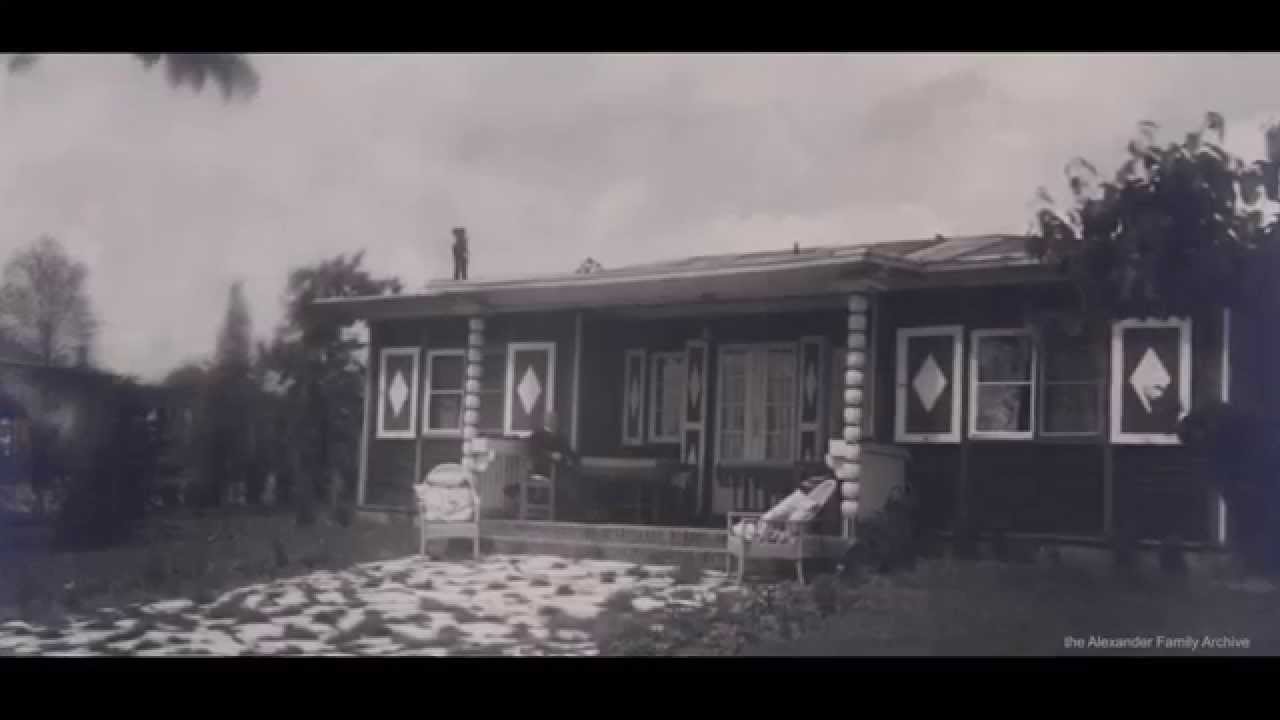
So as I have previously done, I am going to recommend something in the meantime and leave you to investigate.  The above picture shows a holiday house in Germany.  It is the subject of a fantastic book called The House on the Lake by Thomas Harding and I have just finished listening to it on Audible (my favourite way of trying to get through a few more of my endless 'to read' list - I even listen whilst doing the supermarket shopping).
 
The author has a personal connection with the house but he has managed to weave the story of Germany's last hundred years or so very skilfully into the history of the building.  As I said on Twitter this week, I did not know how woeful my post-war German history knowledge was until I listened to this book!  It is excellent and has left me wanting to know more.
 
It also ties nicely into a topic which I have mentioned a few times since I started this blog.  That of the everyday history around us and its effect on our ancestors.  In our buildings and landscape.  I always wonder what buildings have seen.  Not just stately homes but ordinary homes.  For example, the Victorian houses owned by York friends which flooded at Christmas.  Imagine if they could tell of previous floods.  Imagine the many people who must have suffered the same but who had no access to floodlines, to emergency services, to dehumidifiers, etc.
 
So The House on the Lake is on a matter close to my research heart.  Give it a try if you have a chance.
 
There are extra photos at
http://www.bbc.co.uk/programmes/b06sgxjc although you can no longer listen on BBC iPlayer. 
 
I downloaded the book at http://www.audible.co.uk/


Monday, 8 February 2016

Numbering

 
Something very exciting has happened.  I have won a competition to have a DNA test!  No, not on Jeremy Kyle.  I entered a competition run by the marvellous Families In British India Society (FIBIS) before Christmas.  You had to write a piece about why a DNA test might be useful for your family history research.  And I have won one of the three places!

Now, clearly this is a niche subject to be excited about but just indulge me for a moment.  It hopefully means that I can narrow down which part of India my direct ancestors were from.  There are also questions over a number of Irish connections (ironic, given I have married into a large Irish family) and over the parentage of a great great great grandmother.  I wrote about all of these things for my entry and I have been offered a Family Finder test.  A kit is on its way!  How amazing and bizarre.  Let's hope there are no nasty surprises... Nothing anyone hasn't mentioned in the last forty or so years...  I will keep you posted - unless it is really embarrassing, obviously.
 
*    *    *

So I got that news last night and wanted to share the news.  However, I did plan to write about numbers today. A very good friend was (whisper it) fifty last week.  She does not look fifty.  Far from it.  But she is quite fed up about this milestone.  She says it feels very different to forty and no amount of reminders of the amazing fifty plus celebrities there are these days can cheer her up.  And I do see her point.  I haven't reached it yet but fifty years on the planet is quite something.

What would it have been like, though, in the days when fifty was properly old?  England, for example, in the eighteenth or nineteenth centuries.  When it was quite an achievement to have survived childhood, giving birth, dangerous employment.  There would be the same physical changes presumably but little knowledge of how to ease them.  And for the lower classes, there would be the ever present need to earn a living despite the ageing process.  Or the workhouse (or worse) awaited.

There are, of course, many awful cases of people in developed countries dying at young ages still.  Only the other week, I posted about cancer and diabetes and other diseases.  However, in general, a person reaching their fiftieth birthday in a developed country can reasonably expect at least another twenty years on Earth. 

What is very wrong with Planet Earth, though, is the number of human beings for whom fifty is still an incredible achievement and the number for whom fifty is not a time to look forward.  Life expectancy is very uneven amongst our race.  Fifty should not be a scary number for any of us.

Monday, 1 February 2016

Making a Date


This weekend has been quite a contrast to the last.  Last weekend we were dealing with the first anniversary of my father-in-law's death.  This weekend, we had a welcome happy event.  A belated party for my mother's seventieth birthday.  It was a lovely evening.  Fourteen of us at a gorgeous Italian restaurant.  Three generations - in-laws, step-relations, grandchildren, children, siblings.  So many relationships amongst the group.

And as we travelled home, nursing a bit of a hangover I must admit (praise the Lord for Diet Coke), I thought about how little time my children have spent with my aunts, uncles and cousins.  My mother is one of four.  Three sisters and a brother.  I am one of ten cousins.  We live all over the country and since the death of my grandmother twelve years ago, I don't think we have managed a date where every single person has made it along.

But my children really enjoyed meeting my aunts and uncles at the dinner party.  My daughter was particularly interested in meeting my mother's elder sister and her husband as they had memories of being children during the second world war.  This was a topic of hers last year and she has not lost her enthusiasm for information about it.  Her own grandparents were either too young or in Ireland and did not have a great deal to share with her.  So once she had got over her (pretend!) shyness, there was a lot of chatter.

So my 2016 resolution - typically a month late - is to organise a happy get-together for my mother's family.  My granddad died at seventy one.  My aunt was saying last night that she was sure he would have lived longer if he had gone to a doctor years earlier.  He should have had, at the least, drugs to deal with hardened arteries but most probably a heart bypass.  I have no fear that his children will not visit doctors but their ages are now in the seventies.

And this, combined with January's list of celebrities who have died at similar ages, brings it home that we should spend more time together.  Just for the hell of it rather than because something awful has happened.  There also needs to be a major exchange of information.  I have previously whittered on in blog posts about making sure that you pump all available aged relations for family history snippets before it is too late.  Well, I will be organising a lovely get together. But with questionnaires to fill in as you enter and no exit until you have completed it...
 
PS  you can still vote for my first creative writing piece at www.kishboo.co.uk

Monday, 25 January 2016

Adolescent Angst


On my family tree there are some people who were clearly forced to grow up very quickly.  On every family tree, in fact, there will be ancestors who married young, joined the army young, died of horrible diseases after childhood's blighted with illness.  The ones which stand out on mine are a couple of Anglo-Indian girls who married at 13 or 14 and a pair of brothers who, having lost both parents, were sent, in their early teens, into the army via music scholarships.  Both stayed in the army all of their lives, although only one died in middle age.
 
And now, as I struggle with the beginning of the teenage years for my eldest child, I have begun to question how such ancestors - and the millions like them - managed to begin adult lives so early.  I have been reading quite a lot of articles about teenagers.  My son is a good lad on the whole but there has been that very definite Harry Enfield-esque shift in his manner and attitude.  And, joy, it is only going to get worse.
 
One of the arguments around teenage psychology is about to what extent the 'teenager' is a modern invention.  Some believe that there was no such thing until the 1950s.  That young people went from childhood to dressing like their parents, getting jobs and settling down with nothing in between.  No experimentation, no rebellion.
 
However, the biological and cognitive changes in children between around twelve and seventeen are substantial and surely these cannot be a modern 'invention'.  The changes in their mental abilities during this period are very important for their future lives.  There are all sorts of huge life changes to deal with - all linked to their increasing independence.  And thanks to all of this, they are particularly vulnerable to abuse by others or of substances.
 
So how did our teenage ancestors cope with marriage, work, etc?  Modern Western children could not marry at 13 even if it was legal.  Most are still far too dependent on adults and far too immature in general - despite their attempts to have us believe otherwise via social media!  For example, for my above-mentioned ancestors, I am assuming the girls that married at thirteen then had to run households.  They did not make fantastically wealthy matches and then sit around chatting all day.  My kids can barely keep track of their pocket money or remember to feed the dog!  Actually, maybe despite the faux maturity projected on instagram, etc, possibly we have made teenagers less able to cope.  They are never completely out of contact with us, we drive them everywhere and we agonise over their every grade.
 
I think the 'teenager' definitely is an invention in terms of the recognition, by 1950s advertisers, of the huge marketing potential of the age group.  However, I do think that humans must always have had the attitudes, insecurities and frustrations during this period of their lives.  One of the biggest problems which Marie Antoinette had when she arrived in France, aged 14, to marry the heir to the throne was her own immaturity, capriciousness and tactlessness.   Quite the teen queen.
 
My issue now is how to deal with  these changes, these attitudes without losing communication with my son.  I know it is a phase and I know it will pass.  I just wish I knew when.  To quote Harry Enfield's Kevin, 'It's SO UNFAIR!'

PS my fiction writing efforts are continuing.  My first ever proper short story has been published on Kishboo e-magazine.  If you have a chance, please do read it and vote if you enjoy it!  It has an Anglo-Indian theme, in keeping with my family history interests!